Our homeschooling journey is going to come to an end.
We started homeschooling our oldest child, Z, because the public schools were letting him (and us) down. While they were ready to recognize his abilities as they suited the school, they failed to help him meet his learning needs. That is, they berated him for not completing fairly braindead, repetitive assignments and let him through the system on his amazing testing ability. He helps them (achieving test scores higher than predicted by his in-class achievement). He learns nothing new from them (he is a self-directed learner) and has lower and lower self-esteem from being berated for his attentional problems. This was pretty much lose/lose.
I slowly came to the realization that for the three hours nightly that I was browbeating our gentle son into doing fairly mindless and inane assignments (chapter summary after chapter summary, ad nauseum); I could spend the same amount of time helping him learn new stuff. And, he has learned some incredible new stuff. He is ahead in reading, science, math, and critical thinking. He has explored history, government, and geography. He has done some cool engineering (google First Lego League for more information). What an amazing mind this child has, and he has had nearly free liberty to let it go while homeschooling. We have two last blast trips planned - one to Washington D.C. by train and another to Connecticut.
Why stop homeschooling? Well, for a regular homeschooler, homeschooling has lots of social benefits. But, homeschooling while working full-time has limitations. Namely, it can be somewhat socially isolating. This could, by itself, be rectified. But this year an additional wrinkle has become increasingly pronounced. He is better at avoiding me than I am at holding him to a higher standard in the skills that he needs to work on most. Like everyone else in the world, he prefers to do things that come easily than things that are hard. And, for him, writing is hard. For the last four months (or more) our homeschooling has devolved into a "I'll do what I like then vanish" strategy on his part and a frustrated game of hide-and-seek on mine. I do not have formal grades or any other currency that motivates him. This has created a frustrated mom and a sometimes sad child - and, that is not successsful homeschooling. It is clear that the public school for our district will not meet his needs. If only dictation software worked well enough, he could really rock school...
So, what next? Private school is our plan. The hope is that he is motivated enough by being there to earn his way to stay. Intellectually, it should be a piece of cake... but, the output required of students there far outstrips anything that we've seen in homeschool or regular school. It will take a while to get there.
On our side is that he has some wonderful friends there already, the teaching looks exemplary (from what I've seen), it looks like a fairly loving environment, and he wants to go. There are other gifted children there and they recognize his quirks and are willing to work with us to meet his needs. Will this be enough to make up for the mental toughness he will need to develop in facing his writing demons?
This can be a brilliant move or an abject failure. Only time will tell...
Showing posts with label random thoughts. Show all posts
Showing posts with label random thoughts. Show all posts
Monday, April 16, 2012

Thursday, March 22, 2012
Not to be outdone.
Here is a picture of a dog:
 What? You say you want the whole dog?
Ok...
 And, finally, I'll add a child to the mix...


Ok...


Wednesday, March 14, 2012
Living and dying with Faith
Yesterday was my mother's birthday. She was a wonderful woman: full of love, compassion, grace, and (yes) faith. She was always the first to arrive in the casserole brigade for anyone in need, sent notes to her friends for milestones (both good and bad), and shared in people's joys and woes. She set a good example of living well, being kind, and behaving honorably.
She contracted cancer at age 72. It was misdiagnosed for months. When she was finally diagnosed, the cancer had metastacized to multiple sites. The primary tumor was lung cancer - they hadn't looked for it because she was not a smoker. She suffered terribly during her illness. Bone metastases are, as it turns out, incredibly painful - as they can impinge nerves. Cancer also uses a great deal of energy and metabolism, leaving its host feeling quite sick.
She showed tremendous grace during her illness. While she was sad about being sick; not once did she ask "why me?". She didn't complain. She didn't moan. She did her best to maintain her sense of humor and remain pleasant and upbeat. She didn't just do that when she was out and about. I was with her, every day, and that was how she lived.
When she was confronted with treatment options, she made it clear that quality of life was more important than trying every treatment. She was very clear that she didn't want to take treatments that would depreciate her quality of life if they weren't likely to fix the problem. Time after time we were reassured that the chemotherapy was sure to help.
Mom died five months after being diagnosed. Five months after she and dad celebrated fifty years together. Mom died four months before my youngest son was born. Mom died nine months before my youngest niece was born. While mom lived a rich life and certainly, no one can reasonably argue that dying at 72 having seen all of your children grow up and have families can be considered tragic. I would, however, argue that I would not wish to die the way that she did.
Chemotherapy made my mother very ill. Chemotherapy did absolutely nothing to slow tumor growth - her cancer was aggressive and did not respond to the treatment at all. Ultimately, she failed due to malnutrition as much as from cancer. The biggest hurdle during the five months of her disease was a daily battle to try to eat anything and to keep anything down. This was the ongoing theme and prevented mom from going out of her apartment, socializing with anyone, and visiting (even on the phone).
My mother died with grace. But, she also died having suffered greatly and (somewhat) unecessarily. The pain due to metastases was handled as best we could with radiation (to reduce tumor size) and opiates. But, the illness due to chemotherapy and the resulting wasting away was not necessary. My mom died with faith in her doctors, faith in her religion, and faith in her family. Modern medicine failed mostly by not honestly portraying the road we faced. Informed consent requires physicians to tell us the bad news as much as the good. Last week, I read an article in the Wall Street Journal on how doctors die. Specifically, doctors die differently than we "lay people" do. Doctors rarely take advantage of chemotherapy - particularly in metastatic cancer. They know that the prognosis is poor and that chemotherapy produces a cascade of unpleasant secondary problems. Had we known what we later learned, mom's faith would have been better placed.
My mother died seven years ago.
Faith was 72 years old and I still miss her so.
I hope that when my time comes, I can follow her example and die with grace, dignity, and (yes) Faith.
She contracted cancer at age 72. It was misdiagnosed for months. When she was finally diagnosed, the cancer had metastacized to multiple sites. The primary tumor was lung cancer - they hadn't looked for it because she was not a smoker. She suffered terribly during her illness. Bone metastases are, as it turns out, incredibly painful - as they can impinge nerves. Cancer also uses a great deal of energy and metabolism, leaving its host feeling quite sick.
She showed tremendous grace during her illness. While she was sad about being sick; not once did she ask "why me?". She didn't complain. She didn't moan. She did her best to maintain her sense of humor and remain pleasant and upbeat. She didn't just do that when she was out and about. I was with her, every day, and that was how she lived.
When she was confronted with treatment options, she made it clear that quality of life was more important than trying every treatment. She was very clear that she didn't want to take treatments that would depreciate her quality of life if they weren't likely to fix the problem. Time after time we were reassured that the chemotherapy was sure to help.
Mom died five months after being diagnosed. Five months after she and dad celebrated fifty years together. Mom died four months before my youngest son was born. Mom died nine months before my youngest niece was born. While mom lived a rich life and certainly, no one can reasonably argue that dying at 72 having seen all of your children grow up and have families can be considered tragic. I would, however, argue that I would not wish to die the way that she did.
Chemotherapy made my mother very ill. Chemotherapy did absolutely nothing to slow tumor growth - her cancer was aggressive and did not respond to the treatment at all. Ultimately, she failed due to malnutrition as much as from cancer. The biggest hurdle during the five months of her disease was a daily battle to try to eat anything and to keep anything down. This was the ongoing theme and prevented mom from going out of her apartment, socializing with anyone, and visiting (even on the phone).
My mother died with grace. But, she also died having suffered greatly and (somewhat) unecessarily. The pain due to metastases was handled as best we could with radiation (to reduce tumor size) and opiates. But, the illness due to chemotherapy and the resulting wasting away was not necessary. My mom died with faith in her doctors, faith in her religion, and faith in her family. Modern medicine failed mostly by not honestly portraying the road we faced. Informed consent requires physicians to tell us the bad news as much as the good. Last week, I read an article in the Wall Street Journal on how doctors die. Specifically, doctors die differently than we "lay people" do. Doctors rarely take advantage of chemotherapy - particularly in metastatic cancer. They know that the prognosis is poor and that chemotherapy produces a cascade of unpleasant secondary problems. Had we known what we later learned, mom's faith would have been better placed.
My mother died seven years ago.
Faith was 72 years old and I still miss her so.
I hope that when my time comes, I can follow her example and die with grace, dignity, and (yes) Faith.
Tuesday, January 31, 2012
Too many corks.
There is an image, tossed about by some, of a job whereby you need to keep a series of corks underwater. As you push some further down, others escape your hands and pop up to the water's surface.
At the moment, there are just too many corks in the tub.
Z, our oldest, has been homeschooling for a year and a half. We are always trying to find new and different ways to eke some productivity out of his day. He has nearly as many ways of evading work as getting it done. I could make a full-time job of homeschooling just this one child. I have to satisfy myself with the fact that he is learning (a lot), and even though his work output is small - he has academic gains. But, he could always use more playdates, more directed activities, and more of my time.
B, our middle child, is going through a difficult time. It seems like B is always going through a tough time. He operates from one crisis to another, close-lipped about each of them. I so hope that he will grow into a responsible man someday, but I worry so. He has everything going for him... he is bright, athletic, tall, rugged, and capable. But, he can also be impulsive, irresponsible, dishonest, and rude. He can be amazingly charming and he needs love and cuddles and understanding (and, he needs them most when he is the most horrid).
T is suddenly not the amiable and easy-going kid he's always been. He was telling me that another kindergartner has been calling him stupid. He isn't always honest, so I don't know how much of his agony is truly caused by this other child and how much is his trying to diffuse attention to his own actions.
Then, we live in this house that keeps getting dirtier. With laundry that I keep folding, washing, folding, and washing - and it just keeps coming. And, things break and things need attention, and I need to call people and make arrangements and feed the dog and vacuum and all kinds of things.
And, there is this job... I need to do things for my job. I need to write, and plan a course, and keep up with my materials and my colleagues. I need to read the right academic texts and prepare pedagogical talks and research talks, and collaborate with other scientists.
Then, I have this husband. And, I love him dearly and want to spend some time with him. But, by the time the kids are settled, I am tuckered out.
And, I was hoping to stay committed to getting in better physical condition this year. I have more time, but I am always feeling like I am in the throes of not finishing something else that is crucial. And, with a homeschooling kid and a full-time job - I never feel like I can quite get the right stuff done to meet this obligation.
This is where I am at the moment.
Words to myself: The dirty house will someday get cleaned. And, I have to be satisfied with not really doing things the way I think that they should be done. Because, T won't always be six - and, it is now that he needs to be reminded that he is not stupid - regardless of what some other little six-year-old says. B won't always (please, oh please, be true) need so much constant intervention. And, Z is going to grow up on us and some day figure out how (please) to get himself through school or work on his own. And, my job will still be there - even though I wish I could feel like I was really doing it the way I'd like. And, J loves me and me him - even if I can't always stay awake to tell him so.
At the moment, there are just too many corks in the tub.
Z, our oldest, has been homeschooling for a year and a half. We are always trying to find new and different ways to eke some productivity out of his day. He has nearly as many ways of evading work as getting it done. I could make a full-time job of homeschooling just this one child. I have to satisfy myself with the fact that he is learning (a lot), and even though his work output is small - he has academic gains. But, he could always use more playdates, more directed activities, and more of my time.
B, our middle child, is going through a difficult time. It seems like B is always going through a tough time. He operates from one crisis to another, close-lipped about each of them. I so hope that he will grow into a responsible man someday, but I worry so. He has everything going for him... he is bright, athletic, tall, rugged, and capable. But, he can also be impulsive, irresponsible, dishonest, and rude. He can be amazingly charming and he needs love and cuddles and understanding (and, he needs them most when he is the most horrid).
T is suddenly not the amiable and easy-going kid he's always been. He was telling me that another kindergartner has been calling him stupid. He isn't always honest, so I don't know how much of his agony is truly caused by this other child and how much is his trying to diffuse attention to his own actions.
Then, we live in this house that keeps getting dirtier. With laundry that I keep folding, washing, folding, and washing - and it just keeps coming. And, things break and things need attention, and I need to call people and make arrangements and feed the dog and vacuum and all kinds of things.
And, there is this job... I need to do things for my job. I need to write, and plan a course, and keep up with my materials and my colleagues. I need to read the right academic texts and prepare pedagogical talks and research talks, and collaborate with other scientists.
Then, I have this husband. And, I love him dearly and want to spend some time with him. But, by the time the kids are settled, I am tuckered out.
And, I was hoping to stay committed to getting in better physical condition this year. I have more time, but I am always feeling like I am in the throes of not finishing something else that is crucial. And, with a homeschooling kid and a full-time job - I never feel like I can quite get the right stuff done to meet this obligation.
This is where I am at the moment.
Words to myself: The dirty house will someday get cleaned. And, I have to be satisfied with not really doing things the way I think that they should be done. Because, T won't always be six - and, it is now that he needs to be reminded that he is not stupid - regardless of what some other little six-year-old says. B won't always (please, oh please, be true) need so much constant intervention. And, Z is going to grow up on us and some day figure out how (please) to get himself through school or work on his own. And, my job will still be there - even though I wish I could feel like I was really doing it the way I'd like. And, J loves me and me him - even if I can't always stay awake to tell him so.
Monday, January 23, 2012
That's what you think about in the back seat?
I happened on the most interesting deck of cards the other day. Each card in the deck shares one, and only one, symbol with every other card. The game entails a race to see who can find the shared symbol on any two cards first. It got me thinking about how they are made.
So, as a puzzler, I asked Z to think about the problem. How many unique symbols does a deck of ten cards have to have for each card to share one and only one symbol with every other card in the set? I said, don't worry about solving this immediately - but, I'll be interested to hear if you can solve it.
Without a pause, he starting talking. Here are his words, as closely as I can recall...
"Oh, I've solved this before. I was thinking about this once while we were driving somewhere. The problem isn't how many symbols... it's the summing them up. You see, for ten cards, you'd need nine plus eight plus seven and so on to one symbols. The tenth card would share one of nine symbols with each card. Then, the ninth card would share eight unique symbols with the remaining cards and so on. It's really the summing that is a problem. Oh, wait, you don't have to sum them. Nine plus one is ten, eight plus two is ten, and so on until we get to five. That's, uh, four times ten, leaving the five. So, you need 45 symbols for ten cards."
I can't decide which is more impressive... Is it that he has thought about this while we were driving his brother to practice? Is it that he could just spew the answer off the top of his head? Is it that he found summation harder than the problem? That he found the alternate work-around from summation? Or, is it that he gave me the answer in about thirty seconds of talking it through out loud?
Now, when he doesn't chit-chat with me while we drive around town, I'll be wondering what algorithms are kicking around in his head.
So, as a puzzler, I asked Z to think about the problem. How many unique symbols does a deck of ten cards have to have for each card to share one and only one symbol with every other card in the set? I said, don't worry about solving this immediately - but, I'll be interested to hear if you can solve it.
Without a pause, he starting talking. Here are his words, as closely as I can recall...
"Oh, I've solved this before. I was thinking about this once while we were driving somewhere. The problem isn't how many symbols... it's the summing them up. You see, for ten cards, you'd need nine plus eight plus seven and so on to one symbols. The tenth card would share one of nine symbols with each card. Then, the ninth card would share eight unique symbols with the remaining cards and so on. It's really the summing that is a problem. Oh, wait, you don't have to sum them. Nine plus one is ten, eight plus two is ten, and so on until we get to five. That's, uh, four times ten, leaving the five. So, you need 45 symbols for ten cards."
I can't decide which is more impressive... Is it that he has thought about this while we were driving his brother to practice? Is it that he could just spew the answer off the top of his head? Is it that he found summation harder than the problem? That he found the alternate work-around from summation? Or, is it that he gave me the answer in about thirty seconds of talking it through out loud?
Now, when he doesn't chit-chat with me while we drive around town, I'll be wondering what algorithms are kicking around in his head.
Friday, January 20, 2012
Feeding fish to cheetahs.
There is a wonderful article by Stephanie Tolan on how public educators define and recognize giftedness (http://www.stephanietolan.com/is_it_a_cheetah.htm). She talks about how, if we define cheetahs solely by their ability to dash about at nearly 70 mph, we'd never be able to recognize a cheetah in a zoo. It is a terrific metaphor - zoos don't usually have the space for cheetahs to reach top speeds. Even the most remarkable zoos, if they offer the space for a cheetah to really stretch out, don't give cheetahs any need to. Cheetahs only reach top speed if they are chasing something remarkably zippy. Cheetahs that are fed pre-killed meat simply don't need to dash like that.
Likewise, gifted kids may be hard to recognize in public schools. While the gifted and high-achieving kids are pretty easy to recognize anywhere, not all gifted kids fit that mold. The little girl that teaches herself Greek and complies with everything at school quickly and easily - sure. But, the gifted kid that is bored by the curriculum might just not comply - and, therefore, not fit the criteria in achievement to be recognized as gifted.
But, some zoos don't stop at feeding cheetahs pre-killed meat - they make them chase fish. What if the school cares about reading and writing skills first in identifying gifted kids? What if, further, the school documents an inability to sit at their desk and finish their work as a criterion. The little boy that doesn't care about reading because he is busy studying the clock and imagining how different gears might make the hands go at different speeds is basically the cheetah ignoring the fish. Because, cheetahs don't swim. Then, the little cheetah that is bored by fish, but fascinated by the ducks that come to the pond will soon be not only passed over by the gifted program - but, passed over by even moderate treatment by the zoo.
We are parenting some cheetahs that hate the pool. Sure, they aren't much into reading or writing, but they all played competent chess in kindergarten (beating 4th and 5th graders regularly). You want them to read? Give the boys a technical manual on construction, building, or sports. Yeah, they don't like coloring, but they can build anything you want out of Lego. You don't think that they can follow step-by-step instructions? Instead of having them follow your step-by-step art instructions, you should see how they built the "mini-weapon of mass destruction" from the design manual. They hate memorizing their times tables, but they've solved algebra problems for our Easter "clue" hunt since they were three. Sure, you complain that they don't show their work in math, but they don't actually miss any of the answers. You don't like that they didn't solve the problem using the method you were teaching? You should realize that they were solving it while you were talking - and, got the right answer using a different method. Writing sentences about how Suzie "felt" in a book may provoke moans and tears. But, ask them to explain the importance of "gearing up" vs. "gearing down" and sit back to enjoy the lecture. They may not remember to bring home the correct books to complete their homework assignments. But, on the way home, they can disassemble the car's seat belt (the manufacturer didn't think that it could be done). My kindergartner couldn't remember to take his shoes with him when we left the house, but he explained a graphical model with null cline analysis to my college seniors.
I constantly feel like we battle the ability of the teachers to recognize and reinforce the value of students that have exceptionalities in areas that are not the stalwarts of early education. The losers here are the kids - their exceptionalities are not valued by anyone at their school. The are learning to hate school - it feels (to them) like hours of uninteresting work punctuated by little or no time out of their seats.
 [Image from http://www.hoagiesgifted.org/]
If only we can survive early education - it will be amazing to see where they can go.
Likewise, gifted kids may be hard to recognize in public schools. While the gifted and high-achieving kids are pretty easy to recognize anywhere, not all gifted kids fit that mold. The little girl that teaches herself Greek and complies with everything at school quickly and easily - sure. But, the gifted kid that is bored by the curriculum might just not comply - and, therefore, not fit the criteria in achievement to be recognized as gifted.
But, some zoos don't stop at feeding cheetahs pre-killed meat - they make them chase fish. What if the school cares about reading and writing skills first in identifying gifted kids? What if, further, the school documents an inability to sit at their desk and finish their work as a criterion. The little boy that doesn't care about reading because he is busy studying the clock and imagining how different gears might make the hands go at different speeds is basically the cheetah ignoring the fish. Because, cheetahs don't swim. Then, the little cheetah that is bored by fish, but fascinated by the ducks that come to the pond will soon be not only passed over by the gifted program - but, passed over by even moderate treatment by the zoo.
We are parenting some cheetahs that hate the pool. Sure, they aren't much into reading or writing, but they all played competent chess in kindergarten (beating 4th and 5th graders regularly). You want them to read? Give the boys a technical manual on construction, building, or sports. Yeah, they don't like coloring, but they can build anything you want out of Lego. You don't think that they can follow step-by-step instructions? Instead of having them follow your step-by-step art instructions, you should see how they built the "mini-weapon of mass destruction" from the design manual. They hate memorizing their times tables, but they've solved algebra problems for our Easter "clue" hunt since they were three. Sure, you complain that they don't show their work in math, but they don't actually miss any of the answers. You don't like that they didn't solve the problem using the method you were teaching? You should realize that they were solving it while you were talking - and, got the right answer using a different method. Writing sentences about how Suzie "felt" in a book may provoke moans and tears. But, ask them to explain the importance of "gearing up" vs. "gearing down" and sit back to enjoy the lecture. They may not remember to bring home the correct books to complete their homework assignments. But, on the way home, they can disassemble the car's seat belt (the manufacturer didn't think that it could be done). My kindergartner couldn't remember to take his shoes with him when we left the house, but he explained a graphical model with null cline analysis to my college seniors.
I constantly feel like we battle the ability of the teachers to recognize and reinforce the value of students that have exceptionalities in areas that are not the stalwarts of early education. The losers here are the kids - their exceptionalities are not valued by anyone at their school. The are learning to hate school - it feels (to them) like hours of uninteresting work punctuated by little or no time out of their seats.

If only we can survive early education - it will be amazing to see where they can go.
Tuesday, January 17, 2012
The intended audience.
Is the intended audience important when we consider creativity? How does the audience change the process, the product, and the enjoyment of stretching your brain to see connections, view new perspectives, or represent thoughts or ideas.
While I write this blog primarily for myself, I enjoy the occasional comment or email that it provokes. But, I am not driven to write here because I want or need your feedback. This is truly a repository for me. If something resonates with someone else - that makes me happy. If no one responds, that is also fine. I love writing. But, when I write with a strong audience in mind (particularly my scientific writing), the actual critic that will view my work takes away from some of the pleasure in sharing my findings.
I dabble in other art forms as well. I sketch and draw (a common tool of natural historians) as these sketches help me keep structures, forms, and identification straight. I enjoy photography, both for the aesthetic value of capturing natural moments and capturing the children as they grown and change. Occasionally I pick up the guitar and try to remember some of what I once knew. I periodically will pick up paint or other crafty things. I enjoy doing these activities as an outlet. But, if I participated with a future audience looming over me, my inner critic gets in the way of the process being enjoyable.
I love to cook. Finding nutritious and delicious ways to feed myself (and my family) is a joy. Sadly, our palates do not always agree on what constitutes delicious. With a terribly fussy youngest child and a super-taster for a husband - I have been somewhat limited here as of late. Thus, here is another creative endeavor where my process changes when I have an audience.
When you create - how does your audience change the process?
While I write this blog primarily for myself, I enjoy the occasional comment or email that it provokes. But, I am not driven to write here because I want or need your feedback. This is truly a repository for me. If something resonates with someone else - that makes me happy. If no one responds, that is also fine. I love writing. But, when I write with a strong audience in mind (particularly my scientific writing), the actual critic that will view my work takes away from some of the pleasure in sharing my findings.
I dabble in other art forms as well. I sketch and draw (a common tool of natural historians) as these sketches help me keep structures, forms, and identification straight. I enjoy photography, both for the aesthetic value of capturing natural moments and capturing the children as they grown and change. Occasionally I pick up the guitar and try to remember some of what I once knew. I periodically will pick up paint or other crafty things. I enjoy doing these activities as an outlet. But, if I participated with a future audience looming over me, my inner critic gets in the way of the process being enjoyable.
I love to cook. Finding nutritious and delicious ways to feed myself (and my family) is a joy. Sadly, our palates do not always agree on what constitutes delicious. With a terribly fussy youngest child and a super-taster for a husband - I have been somewhat limited here as of late. Thus, here is another creative endeavor where my process changes when I have an audience.
When you create - how does your audience change the process?
Wednesday, December 14, 2011
Driving me distracted
The federal government is considering whether to force states to outlaw all cell phone use while driving. While I understand that driving distracted is dangerous, I am not comfortable with this sort of legislation. I am reasonably comfortable with texting, web-surfing, and typing being outlawed... all of these tasks require both hands and eyes. But, mental distraction, as in hands-free cell phone use, is not something that legislation can control.
Sure I talk on my phone while driving, but I don't begin to consider that as dangerous or distracting as the other things that I have to do. If they really want to make me safer on the road, it is time to implement the car-top kid carrier. The kids really drive me nuts in the car. They fight, they throw stuff, they moan, and they cry. They pee in their seats, eat, ask me to look at stuff ("um, no, I'll look at the road instead"), and they drop things.
What else do I do while driving? I sometimes eat. I almost always drink soda. I reach for a tissue and blow my nose. I keep my dog out of my lap, she weighs 70 pounds. I reach for my sunglasses.
What don't I do behind the wheel? I never text or read email or websurf. I don't apply make-up or do my hair. I don't apply nail polish. Should we also address the legality of all of these things? I see people applying make-up behind the wheel all the time.
How about instead of legislation to outlaw distractions, we make people more culpable for damage they inflict by being irresponsible?
Sure I talk on my phone while driving, but I don't begin to consider that as dangerous or distracting as the other things that I have to do. If they really want to make me safer on the road, it is time to implement the car-top kid carrier. The kids really drive me nuts in the car. They fight, they throw stuff, they moan, and they cry. They pee in their seats, eat, ask me to look at stuff ("um, no, I'll look at the road instead"), and they drop things.
What else do I do while driving? I sometimes eat. I almost always drink soda. I reach for a tissue and blow my nose. I keep my dog out of my lap, she weighs 70 pounds. I reach for my sunglasses.
What don't I do behind the wheel? I never text or read email or websurf. I don't apply make-up or do my hair. I don't apply nail polish. Should we also address the legality of all of these things? I see people applying make-up behind the wheel all the time.
How about instead of legislation to outlaw distractions, we make people more culpable for damage they inflict by being irresponsible?
Tuesday, December 13, 2011
Enabler.
I have a student signed up for a course. This course is a study abroad offering. Thus, there is a lot of paperwork and planning required. Most of this rests on me. But, there is a substantial amount of planning and preparation that I have to require of the students.
This year, one of my students has, thus far, failed to complete a single piece of this preparation on their own. His mother has been the main point person on every piece of paperwork, documentation, and meeting. His mother has finished the papers, sent the emails, contacted me, and sent apologies.
What will this child do when he gets his first job? Will she serve as a go-between for his boss? Will she wake him up so he can get to work on time?
Kid. You are in your 20s. You are a college student. You want to live "independently". With that kind of power comes responsibility.
Kid. It is time to buck up, grow up, and do the right thing.
Mom. It is time to back off, let your kid face his own consequences, and force your kid to grow up.
I hope that I am never this mom and that my child is never this child.
This year, one of my students has, thus far, failed to complete a single piece of this preparation on their own. His mother has been the main point person on every piece of paperwork, documentation, and meeting. His mother has finished the papers, sent the emails, contacted me, and sent apologies.
What will this child do when he gets his first job? Will she serve as a go-between for his boss? Will she wake him up so he can get to work on time?
Kid. You are in your 20s. You are a college student. You want to live "independently". With that kind of power comes responsibility.
Kid. It is time to buck up, grow up, and do the right thing.
Mom. It is time to back off, let your kid face his own consequences, and force your kid to grow up.
I hope that I am never this mom and that my child is never this child.
Friday, December 9, 2011
New technology.
Z is working on a science project that covers innovations. While discussing the advent of mobile phones, texting, the internet, and email - he suddenly froze.
"How did people communicate before mobile phones?"
"We waited until we got to our destination."
Wow. Maybe someday I'll blow his mind and tell him about tv that you can't pause (and came only in black and white - with three channels and a roof antenna), phones that all have cords, and music spinning on a big black vinyl record.
Suddenly it makes more sense that I need reading glasses.
"How did people communicate before mobile phones?"
"We waited until we got to our destination."
Wow. Maybe someday I'll blow his mind and tell him about tv that you can't pause (and came only in black and white - with three channels and a roof antenna), phones that all have cords, and music spinning on a big black vinyl record.
Suddenly it makes more sense that I need reading glasses.
Thursday, December 8, 2011
Dear Abby thinks "Worst First"
A "working mom in Kansas" asked Dear Abby this morning how old her child needs to be before she can leave them alone at all. Abby's response can be found here:
http://www.uexpress.com/printable/print.html?uc_full_date=20111208&uc_comic=da
Essentially, her answer is never, because something could happen.
Here is my response...
Dear Abby,
On 8 December, you responded to a working mom that wanted to know at what age a child can be left in the house alone. You responded “I don’t think children should be left alone if there is any alternative…” because “Too many things can go wrong…” This is a classic example of what Lenore Skenazy (www.freerangekids.com) refers to as “worst-first” thinking. Because of rare tragic things that could happen, we will handicap our children’s ability to gain from the many positives associated with this kind of independence. Further, we will handicap this parent’s finances and their ability to shop alone for brief periods of time.
Can you really not imagine any age where a child is capable of being left alone in their home? Not at 8? Or 11? Or 14? Or 17? How is it that these children will learn to be capable adults if they don’t get to practice gaining increments of independence under the (sometimes remote) supervision of their parents or guardians? Is this why, as a professor, I see college students today that are incapable of facing the regular bumps and glitches of daily life without calling on their parents to fix their problems for them?
Perhaps instead of “never”, we can look for indicators that a child is capable of short time periods home alone. In that each child develops differently, the right age for gaining responsibility and freedom will be different. Here is one article highlighting the signs of readiness: http://kidshealth.org/parent/firstaid_safe/home/home_alone.html. After experimenting with leaving them home during short errands, children can gain confidence and earn additional freedoms. Practice can help children gain confidence in solving their own problems on the road to becoming capable adults.
Instead of infantilizing our children due to remote risks, we need to empower them. If you will recall, just a few decades ago, we did that very thing. I was a latch-key kid at nine and babysitting at 11. In the 70’s, this was regular practice. Before you argue that the world was safer then, note that the crime statistics show that life is safer today than it has been since 1970 or earlier. In that time on my own, I learned how to feed myself when I was hungry, how to clean up after myself, how to take care of others, who to call when you need help, and I developed the confidence that I could take care of myself. That experience was invaluable.
http://www.uexpress.com/printable/print.html?uc_full_date=20111208&uc_comic=da
Essentially, her answer is never, because something could happen.
Here is my response...
Dear Abby,
On 8 December, you responded to a working mom that wanted to know at what age a child can be left in the house alone. You responded “I don’t think children should be left alone if there is any alternative…” because “Too many things can go wrong…” This is a classic example of what Lenore Skenazy (www.freerangekids.com) refers to as “worst-first” thinking. Because of rare tragic things that could happen, we will handicap our children’s ability to gain from the many positives associated with this kind of independence. Further, we will handicap this parent’s finances and their ability to shop alone for brief periods of time.
Can you really not imagine any age where a child is capable of being left alone in their home? Not at 8? Or 11? Or 14? Or 17? How is it that these children will learn to be capable adults if they don’t get to practice gaining increments of independence under the (sometimes remote) supervision of their parents or guardians? Is this why, as a professor, I see college students today that are incapable of facing the regular bumps and glitches of daily life without calling on their parents to fix their problems for them?
Perhaps instead of “never”, we can look for indicators that a child is capable of short time periods home alone. In that each child develops differently, the right age for gaining responsibility and freedom will be different. Here is one article highlighting the signs of readiness: http://kidshealth.org/parent/firstaid_safe/home/home_alone.html. After experimenting with leaving them home during short errands, children can gain confidence and earn additional freedoms. Practice can help children gain confidence in solving their own problems on the road to becoming capable adults.
Instead of infantilizing our children due to remote risks, we need to empower them. If you will recall, just a few decades ago, we did that very thing. I was a latch-key kid at nine and babysitting at 11. In the 70’s, this was regular practice. Before you argue that the world was safer then, note that the crime statistics show that life is safer today than it has been since 1970 or earlier. In that time on my own, I learned how to feed myself when I was hungry, how to clean up after myself, how to take care of others, who to call when you need help, and I developed the confidence that I could take care of myself. That experience was invaluable.
Wednesday, August 31, 2011
The end of a life together
For anyone that follows Melissa at Suburban Bliss, you have been following a very difficult story lately. Melissa has been struggling with mental illness for quite some time, quite publicly. She is clinically depressed, on and off medication, and dealing with her marriage, family, and a dysfunctional family history. It's all there to read about. What a tough hand to be dealt - bad enough to have the crazy family... but, the ongoing legacy (genetic, environmental, or whatever) of mental illness is obviously making it all more challenging.
Whether or not the public aspect of her struggles (her blog) has made it worse - no one can clearly demonstrate. However, from this vast distance, over the internet... I really feel for her and her family. Everyone is clearly in pain. And, while her husband feels as though he is done with the good fight, and Melissa seems to struggle to figure out what normal is, and their children are in the middle of all of this. We can all take a moment to send our best wishes to all of them that they can sort out their family life in the most positive way for all involved, maintain their health (mental and physical), and learn a new way to get along.
Whether or not the public aspect of her struggles (her blog) has made it worse - no one can clearly demonstrate. However, from this vast distance, over the internet... I really feel for her and her family. Everyone is clearly in pain. And, while her husband feels as though he is done with the good fight, and Melissa seems to struggle to figure out what normal is, and their children are in the middle of all of this. We can all take a moment to send our best wishes to all of them that they can sort out their family life in the most positive way for all involved, maintain their health (mental and physical), and learn a new way to get along.
Tuesday, August 30, 2011
The correct way to do it.
I took a child to the doctor for wart removal some time ago. The doctor pointed out that there are about a dozen approved treatments to treat warts.
"Which means, of course, that none of them are really good. If there is a really good treatment, it becomes the treatment of choice".
Why aren't there dozens of books out there with the following titles?
So, when we see hundreds, thousands, or even more titles in a "How to" section - that indicates that there is not just one solution that works for everyone.
Which sections of self-help guides are full of titles?
Suffice it to say, we should all recognize that there is no such thing as one size fits all education, parenting, or marriage.
"Which means, of course, that none of them are really good. If there is a really good treatment, it becomes the treatment of choice".
Why aren't there dozens of books out there with the following titles?
- A dozen different tools to drive a nail into wood.
- Which way do you want to address your envelope?
- Different solutions to 2+2.
- Which way should you punctuate "I'm"?
- How you should sit in a chair.
So, when we see hundreds, thousands, or even more titles in a "How to" section - that indicates that there is not just one solution that works for everyone.
Which sections of self-help guides are full of titles?
- How to lose weight and stay in shape.
- How to be an effective teacher.
- How to be an effective learner.
- How to be the most effective and loving parent.
- How to have a happy and successful marriage.
Suffice it to say, we should all recognize that there is no such thing as one size fits all education, parenting, or marriage.
Monday, August 8, 2011
What does handicapped mean?
My father lives in a retirement community. When asked how he is feeling, he generally answers that he feels good. And, generally, he does. He does, however, have his third new heart valve, shoulders that don't allow him to raise his arms, neuromas that cause pain and numbness below his knees, and a variety of other aches, pains, and challenges. When asked about any of those items - he, like most of the more well-adjusted residents, would answer that "everyone has their issues".
Issues are not restricted to the old-folks home.
Whether it is a bum knee, hearing loss, digestion issues, eyesight degradation, memory loss, attentional deficits, social deficits, dysgraphia, dyslexia, or some other deficit - everyone has their issues. No one is perfect.
I read an inspirational post at freerangekids.com this morning that shows a handicapped boy wheeling himself to camp. The other parents are horrified that this poor child has to wheel himself with his friends down the road to camp. The kid's friends had to get their bikes to keep up with his speed-demon wheeling. Which kids are handicapped? It is the ones that aren't allowed to walk on their own or the ones that are forced to?
Early on in my teaching career, I had a student that was "handicapped". In that I teach field courses with some rigorous physical activities, early in the semester I pulled him aside.
"I see that you have issues with your arm. You look very capable. I just want to let you know that if you are ever asked to do something that is difficult or challenging - just give me a nod, and I will understand. Do you have any specific limitations that I should know about?"
"Nope. I'll be fine."
Boy, was he ever serious. This one-handed boy toted canoes, paddled canoes, pulled nets, went through samples, shoveled, and did everything everyone else did - plus some. What a great kid. This kid hadn't accomplished a lot despite his disability - his disability gave him the fire to accomplish whatever he wanted to. How did he do it? I couldn't even tell you... I saw the kid tote a canoe and paddle it, and I am still not sure how one paddles one-handed. He's an accomplished fisherman too!
High school football? Sure - he played until his father didnt' allow him to - after his good arm was shattered in a particularly rough tackle. I knew him after he'd recovered from his football injury. This kid was a perfectly normal, if motivated, bright, and active young man.
No one ever told this kid what he couldn't do - so, he found a way to do whatever was thrown his way.
If we are defined by our actions rather than our words or our shortcomings... we need to take whichever issues life throws at us, however big or small, and succeed however it takes and however we define it.
Issues are not restricted to the old-folks home.
Whether it is a bum knee, hearing loss, digestion issues, eyesight degradation, memory loss, attentional deficits, social deficits, dysgraphia, dyslexia, or some other deficit - everyone has their issues. No one is perfect.
I read an inspirational post at freerangekids.com this morning that shows a handicapped boy wheeling himself to camp. The other parents are horrified that this poor child has to wheel himself with his friends down the road to camp. The kid's friends had to get their bikes to keep up with his speed-demon wheeling. Which kids are handicapped? It is the ones that aren't allowed to walk on their own or the ones that are forced to?
Early on in my teaching career, I had a student that was "handicapped". In that I teach field courses with some rigorous physical activities, early in the semester I pulled him aside.
"I see that you have issues with your arm. You look very capable. I just want to let you know that if you are ever asked to do something that is difficult or challenging - just give me a nod, and I will understand. Do you have any specific limitations that I should know about?"
"Nope. I'll be fine."
Boy, was he ever serious. This one-handed boy toted canoes, paddled canoes, pulled nets, went through samples, shoveled, and did everything everyone else did - plus some. What a great kid. This kid hadn't accomplished a lot despite his disability - his disability gave him the fire to accomplish whatever he wanted to. How did he do it? I couldn't even tell you... I saw the kid tote a canoe and paddle it, and I am still not sure how one paddles one-handed. He's an accomplished fisherman too!
High school football? Sure - he played until his father didnt' allow him to - after his good arm was shattered in a particularly rough tackle. I knew him after he'd recovered from his football injury. This kid was a perfectly normal, if motivated, bright, and active young man.
No one ever told this kid what he couldn't do - so, he found a way to do whatever was thrown his way.
If we are defined by our actions rather than our words or our shortcomings... we need to take whichever issues life throws at us, however big or small, and succeed however it takes and however we define it.
Thursday, July 21, 2011
Early onset dementia...
So, I'm reading a work email on my iPhone and I realize that I'd better call someone to look into this problem. So, while carrying around this email and musing on its implications, I walk around my house looking for (you guessed it) - my iPhone.
Just me?
Um, maybe you should look in your hand?!
Just me?
Um, maybe you should look in your hand?!
Friday, June 24, 2011
To thine own self be true.
While it is not clear that Polonius meant the same by this phrase as I do here, it is important stuff.
"To thine own self be true."
Polonius may well have meant by this to have your actions consistent with what he considered to be good character - represent yourself well by your actions. Today, we extend this expression to include that one's actions should be consistent with one's ideals, beliefs, and thoughts - that we may know the person by their actions, deeds, and expressions.
This is so important to live. People are happier, more comfortable in their own skins, self-assured, when they behave like the people they are. This is the kind of message that we impart to children (our own, our children's friends, and in my case - also my students).
Our children should let their actions and words reflect themselves - and the best of themselves. This can be a self-check to insure that they are keeping their thoughts, minds, and deeds healthy and compassionate. If you wouldn't say it or do it in front of your grandmother - you shouldn't say it or do it.
We need, however, to be aware of what this expression means to a broad diversity of people.
I attended a meeting last week... there was a young man there who was worried. He was moving to a foreign country and he was worried about how he would be perceived. What if he wanted to date someone local, would it be legal? Could he just be himself there? Would he need to worry about being arrested? Should he lie about who he is?
As a married, middle-aged mom - I don't have tothink about this; I can give my husband a kiss in public, hold hands, and share an intimate moment on date night. But, in our ultra-religious community, if I were gay - whether I could express myself safely would be a constant theme in my life. To whom can I be honest without worrying about repercussions for myself, my children, my partner, my job...
We need, as compassionate people, to find a way to let people be true to their own selves. As long as everyone involved in any relationship is consenting (and able to consent) - no one else need worry or even think about what dynamics are involved.
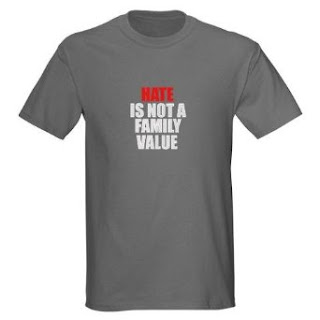
If you never have - attend a PFLAG meeting, it may open your eyes.
http://community.pflag.org/
"To thine own self be true."
Polonius may well have meant by this to have your actions consistent with what he considered to be good character - represent yourself well by your actions. Today, we extend this expression to include that one's actions should be consistent with one's ideals, beliefs, and thoughts - that we may know the person by their actions, deeds, and expressions.
This is so important to live. People are happier, more comfortable in their own skins, self-assured, when they behave like the people they are. This is the kind of message that we impart to children (our own, our children's friends, and in my case - also my students).
Our children should let their actions and words reflect themselves - and the best of themselves. This can be a self-check to insure that they are keeping their thoughts, minds, and deeds healthy and compassionate. If you wouldn't say it or do it in front of your grandmother - you shouldn't say it or do it.
We need, however, to be aware of what this expression means to a broad diversity of people.
I attended a meeting last week... there was a young man there who was worried. He was moving to a foreign country and he was worried about how he would be perceived. What if he wanted to date someone local, would it be legal? Could he just be himself there? Would he need to worry about being arrested? Should he lie about who he is?
As a married, middle-aged mom - I don't have tothink about this; I can give my husband a kiss in public, hold hands, and share an intimate moment on date night. But, in our ultra-religious community, if I were gay - whether I could express myself safely would be a constant theme in my life. To whom can I be honest without worrying about repercussions for myself, my children, my partner, my job...
We need, as compassionate people, to find a way to let people be true to their own selves. As long as everyone involved in any relationship is consenting (and able to consent) - no one else need worry or even think about what dynamics are involved.

If you never have - attend a PFLAG meeting, it may open your eyes.
http://community.pflag.org/
Thursday, June 2, 2011
Ugly and counterproductive.
At one of my favorite blogs today, there is a battle going on. It is the same old story - mommy wars.
In this case, it has to do with premarital sex and who has the goods on the right way to prevent it, deal with it, or educate children. This is the same old thing though... people trying to make themselves feel better by belittling others. It is as though we never grew past the "mean girl" stage in middle school.
Did you breastfeed your kids?
In public?
No, really, did you exclusively nurse for long enough?
Did your child lead weaning?
Did you cut them off when nursing wasn't appropriate anymore?
Do you feed them right?
You didn't give solids too soon, did you?
You don't give them junk food? Or (gasp) soda?
Did you work out of the house?
Are you setting the example that moms should be separated from their children?
Are you able to be nurturing when you are away all day?
Did you stay home?
Are you sending the wrong message about the capabilities of women?
Do you hover too much?
Are you there enough?
Do your kids get dirty?
Don't you let them play outside?
Do you take them to a house of worship?
Is it the right one?
If not, how will they know right from wrong?
Did you homeschool?
How will they ever be socialized?
Do they go to public school?
How will they ever learn the right stuff?
Do they go to private school?
Isn't that elitist?
Is is just possible that there is more than one way to raise children and have it work out?
How about we just try to support one another?
In this case, it has to do with premarital sex and who has the goods on the right way to prevent it, deal with it, or educate children. This is the same old thing though... people trying to make themselves feel better by belittling others. It is as though we never grew past the "mean girl" stage in middle school.
Did you breastfeed your kids?
In public?
No, really, did you exclusively nurse for long enough?
Did your child lead weaning?
Did you cut them off when nursing wasn't appropriate anymore?
Do you feed them right?
You didn't give solids too soon, did you?
You don't give them junk food? Or (gasp) soda?
Did you work out of the house?
Are you setting the example that moms should be separated from their children?
Are you able to be nurturing when you are away all day?
Did you stay home?
Are you sending the wrong message about the capabilities of women?
Do you hover too much?
Are you there enough?
Do your kids get dirty?
Don't you let them play outside?
Do you take them to a house of worship?
Is it the right one?
If not, how will they know right from wrong?
Did you homeschool?
How will they ever be socialized?
Do they go to public school?
How will they ever learn the right stuff?
Do they go to private school?
Isn't that elitist?
Is is just possible that there is more than one way to raise children and have it work out?
How about we just try to support one another?
Monday, May 23, 2011
There is no replacement for experience.
I just spent all weekend at a teaching conference. The entire weekend focused on meeting our educational goals and objectives as teachers. How can we best approach facilitate learning? What can we do to enhance our connection with students and their connection with the material?
The same keywords continue to surface: active learning, group collaboration, kinesthetic learning, repetition, seeing different perspectives of the same thing, interactive learning, and using multiple modalities.
This morning, while looking for other information on pedagogy, I encountered yet another website that proposes that online (simulated) dissection is better than the real deal (sponsored by, who else, PETA). They provide no evidence to support this contention. I would freely support these amazing virtual experiences as support for the real thing. But, the virtual experience does not replace the real thing. Two-dimensions cannot convey the same information as three. Online, you can't see texture. Online, you can't move things aside, examine connections, feel internal structures, or change your angle. The online versions don't show individual variation. In a lab, students can wander around and see differences between individuals corresponding to sex, size, age, and just individual quirks. All of the aspects that the virtual experience misses are informative to understanding morphology, function, development, and cementing the names of the structures in your memory.
Real dissections are multi-modal, active learning, collaborative, student-directed, kinesthetic, three-dimensional, active, and more real, applied, and relevant.
If something is worth doing - it is worth doing right.
That said, I have offered students with objections the opportunity to use virtual dissection as an alternative. I am ok with someone that has real objections not compromising their beliefs. I can say from my teaching experience, assessment, and student performance that this tool is not as effective by itself as the real deal. This has to be a choice students make.
Like all tools, we need to use dissection wisely and where we will get the most learning opportunies. When I teach about a forest - I go outside rather than watch a movie about one. From a teaching and learning perspective, this is the same thing.
Thursday, May 19, 2011
Losing ourselves in connectivity
I am on a kick now, reading books about nature. Specifically, I have been reading books about man's connection to nature.
We spend so much of our time talking about connections. Connections via phone, email, facebook, skype, and other electronic forms. Connecting to distant other beings that we can communicate with remotely - in our own time, responding at our leisure, and being friends at a distance. We talk about our connections to electricity, electronic media, newspapers, radio, television, and the internet.
We need to spend more time on connections. But not the ones I've already mentioned. We need to spend more time connecting with people we care about. These connections have to occur with the phone turned off, the email disconnected, and not whilst multi-tasking. The people we care for deserve to have some of our real time - without distraction. I spend much of my time carrying people here and there, fixing dinner while helping with homework, working while chatting, eating while perusing facebook, and folding clothes while nagging the kids to put their shoes away. The people we care for (spouses, children, friends, as well as co-workers, students, and acquaintances) deserve to have us really listen when they speak.
We also need to spend more time connecting to the natural world. As a field biologist, of course I consider this a crucial element of life. But, as I read more of the literature on how our exposure to the natural world informs our lifestyle, choices, mental and physical health, and relationships - it reinforces that it is worthwhile to drop everything and spend some time outside - in green space. That is, where the bugs, frogs, birds, grass, flowers, trees, and wild things are. Where the wind blows your hair and you need sunscreen. Connecting with nature grounds us, calms us, and reminds us of what is important and what we can let go. Connecting with nature enhances all of our well-being.
We can take this one step further. We need to go outside with the people we care about (leave the electronics behind). You want your sulky teen to speak with you? Take him or her fishing. It is quiet. You aren't stuck staring at each other grasping for words. The whole pace of your interaction slows down and conversation can flow to what needs to be said. Even more important, the calm and the occupation with fishing (and not confronting one another) can allow us to hear and what we need to and allow us to withhold a response if it won't help. If you've ever been a teenager, you might recall that sometimes parents need to hear about our children and reserve judgment.
If you are fishing, the conversation ebbs and flows around where the fish are active and fits easily around your activity. The self-consciousnes of bringing up embarassing or sensitive topics eases when you are fitting a conversation around the birds, fish, and flow of the water. Nervous around someone? You can't stay that way while you float around a pond or wander through a forest.
Sometimes, it isn't other people that we need to connect with. Feeling stressed, overwhelmed, or down? Take yourself outside. Take a fishing rod, a kayak, a sketchbook, a journal, your lunch, or nothing at all. Take a vigorous hike, an aggressive paddle, an intense fishing trip, a gentle walk, or plop yourself down somewhere. Take in your surroundings. Listen. Sniff the breeze. Shake your hair out. Take it easy on yourself by soaking up the world around you and reserving judgment for some other time.
Mental health, physical health, environmental health - it's out there. You just need to slow down a bit and it will come to you.
Sunday, April 10, 2011
Where are the paragraphs?
The last several posts were edited, complete with paragraphing. In all cases, the post showed up sans paragraphing (I added it back in, for those that have paragraphs). What gives?
Subscribe to:
Posts (Atom)